Sports Team Transportation in Chicago and the Midwest: How to Keep Tournament & Sports Travel Organized From Start to Finish
Contents
- 1 Why Transportation Matters So Much for Sports Travel
- 2 Chicago Is a Major Hub for Tournaments, Showcases, and Athletic Events
- 3 Coordinating Team Arrivals and Departures
- 4 Managing Equipment and Storage for Team Travel
- 5 Tournament Travel Often Involves More Than One Venue
- 6 Airport Transportation for Traveling Teams
- 7 Midwest Sports Travel Requires Regional Reach
- 8 Common Sports Travel Challenges Teams Can Avoid
- 9 Choosing the Right Transportation Partner for Team Travel
- 10 Final Thoughts
For coaches, team managers, athletic directors, tournament organizers, and travel coordinators, transportation is one of the most important parts of any sports trip. Whether a team is heading to a local game, a regional tournament, a multi-day championship, or a showcase event, travel planning can quickly become one of the most demanding parts of the experience.
In many cases, the success of the trip depends on much more than arriving at the venue. Teams need to stay on schedule, travel comfortably, manage equipment, coordinate hotel check-ins, and move efficiently between airports, fields, arenas, and event locations. When those details are not planned carefully, even a well-organized tournament weekend can become stressful.
In a market like Chicago, where teams often travel between downtown venues, suburban sports complexes, hotels, airports, and neighboring states, having a structured transportation plan can make a significant difference. Understanding how sports team transportation in Chicago and the Midwest works can help organizers keep athletes, coaches, and staff focused on the event rather than the logistics.
Why Transportation Matters So Much for Sports Travel
Sports travel involves a different kind of coordination than standard group transportation. A team is not simply moving from one place to another. It is traveling with a schedule, equipment, staff, and often a great deal of pressure around timing.
A late arrival can affect warm-ups, check-in windows, field assignments, and the overall flow of the event. Confusion around pickups, multiple vehicles, or scattered arrivals can also create unnecessary stress for players, coaches, and families.
When transportation is planned in advance, teams are better able to move as a group and stay organized throughout the trip. Players know where they need to be, coaches can focus on preparation, and team coordinators spend less time solving last-minute travel problems.
For tournaments, showcases, and away games, that kind of structure matters. Reliable team transportation supports punctuality, communication, and a more professional travel experience from start to finish.
Chicago Is a Major Hub for Tournaments, Showcases, and Athletic Events
Chicago and the surrounding region host a wide range of athletic events throughout the year. From youth tournaments and school sports to college competitions and club showcases, the city regularly draws teams from across Illinois and neighboring states.
Many events take place not only in Chicago itself, but also in nearby suburbs and regional sports facilities. Teams may stay in one area, compete in another, and travel to meals, practice spaces, or additional venues throughout the weekend. Some groups may arrive through O’Hare or Midway, while others travel by road from Michigan, Indiana, Wisconsin, or other parts of the Midwest.
Because of this, sports team transportation in Chicago often requires more planning than many people initially expect. A tournament trip may include multiple pickup times, hotel transfers, venue-to-venue movement, and equipment handling, all within a tight schedule.
When transportation is not coordinated in advance, the result is often confusion, delays, and unnecessary complexity during an already busy event.
Coordinating Team Arrivals and Departures
One of the most important parts of sports travel planning is managing arrival and departure timing.
Not every team member arrives at the same time. Some groups travel together from a school, training facility, or athletic center. Others meet at the hotel, the airport, or the venue. For out-of-town tournaments, coaches and staff may also arrive separately from athletes or support personnel.
Without a clear travel plan, organizers often find themselves managing scattered arrivals, delayed departures, and last-minute updates from multiple people. That can become especially difficult when the schedule includes early games, back-to-back matchups, or venue check-in requirements.
A structured transportation plan helps reduce that pressure. With organized group transportation for sports teams, coordinators can establish pickup windows, designate meeting points, and create a schedule that keeps the group moving together as efficiently as possible.
This becomes even more important when teams are traveling for multi-day events or long-distance competition. A well-organized arrival plan sets the tone for the rest of the trip.

Managing Equipment and Storage for Team Travel
Sports travel also involves more than passengers. Teams often bring a large amount of gear, and that gear needs to be considered during transportation planning.
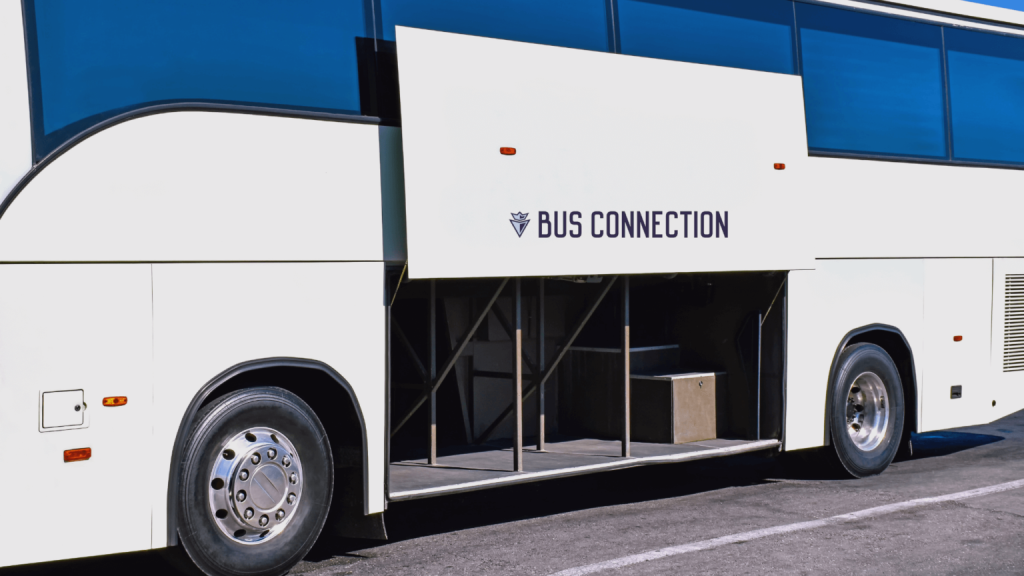
Depending on the sport, teams may travel with duffel bags, uniforms, medical kits, coolers, training supplies, or specialized equipment. Coaches and event planners need to make sure that transportation is planned with both passenger space and storage needs in mind.
This is one of the main reasons organized athletic transportation requires advance coordination. A vehicle that works for standard group travel may not always be the right fit for a sports team carrying additional equipment.
Providing accurate estimates for team size, bags, and gear helps create a smoother travel experience. It also helps avoid overcrowding and allows players and staff to travel more comfortably between locations.
For tournaments and overnight trips, this level of planning is especially valuable. The more clearly luggage and equipment needs are addressed ahead of time, the easier it becomes to keep the trip organized.
Tournament Travel Often Involves More Than One Venue
One of the most common challenges in sports transportation is that tournaments rarely take place in just one location.
A team might stay at a hotel near the airport, play its first game at a suburban sports complex, travel to a second venue later in the day, and then return for dinner or meetings in the evening. On the next day, the schedule may shift again depending on standings, brackets, weather, or updated event logistics.
This is why tournament transportation in Chicago benefits from careful planning. Event weekends often require flexibility, but they also require structure. Teams need a transportation plan that accounts for multiple stops, changing schedules, and realistic travel times.
In a major metro area, traffic, venue access, and timing can affect the entire day. A route that looks simple on paper may take longer in practice, especially during peak hours or when multiple games are being hosted across the region.
For coaches, administrators, and travel organizers, planning transportation with those realities in mind helps avoid missed warm-ups, late arrivals, and unnecessary stress between games.

Airport Transportation for Traveling Teams
For teams arriving from outside the area, airport transfers are often the first major part of the travel experience.
Chicago’s O’Hare International Airport and Midway International Airport serve teams coming from around the country, and in some cases, from outside the United States. Once athletes and staff land, transportation still needs to be coordinated between the airport, the hotel, and the competition venue.
Airport transportation for sports teams requires extra attention because baggage collection can take time, especially when groups are traveling with equipment. Players may arrive on different flights, coaches may be traveling separately, and luggage delays can affect the departure schedule.
Organized airport transportation for sports teams in Chicago helps simplify this process. Clear meeting points, flexible pickup windows, and an organized transfer plan help teams move from the airport to their destination without as much confusion.
For tournaments with tight timelines, this can be one of the most important parts of the trip. A smooth airport transfer helps the team settle in faster and reduces the stress that often comes with travel day.
Midwest Sports Travel Requires Regional Reach
While Chicago is a major center for sports events, many teams compete throughout a much wider regional area. Tournaments, league events, showcases, and championships often involve travel across state lines, especially for teams based in Illinois, Michigan, Indiana, and Wisconsin.
That is why sports transportation is not always just a Chicago service. Many teams need support for longer-distance group travel that connects cities, suburbs, hotels, and venues across the broader Midwest.
Bus Connection’s regional service model supports this type of planning well. While Chicago remains the core hub, the company operates within a 500-mile radius of its terminal, allowing it to support sports travel not only in Illinois, but also across neighboring states including:
- Illinois
- Michigan
- Indiana
- Wisconsin
This wider service area is especially valuable for:
- regional tournaments
- multi-day sports travel
- cross-state league play
- showcase events
- championship weekends
- team hotel transfers
- long-distance group transportation
For organizers managing travel across multiple cities or states, working with a transportation partner that already operates throughout the region can simplify logistics. Rather than trying to coordinate separate providers for different parts of the trip, teams can often work with one transportation company that understands the broader route and the scheduling needs involved.
That kind of consistency helps teams stay organized, especially during longer tournament weekends or multi-stop travel schedules.
Common Sports Travel Challenges Teams Can Avoid
Many of the most frustrating parts of sports travel are preventable when transportation is arranged early and clearly.
One common issue is underestimating travel time. Coaches and organizers may focus on game times without accounting for loading, unloading, traffic, equipment handling, and venue access.
Another frequent problem is relying on carpools or multiple independent vehicles for larger groups. While that may seem manageable at first, it often leads to staggered arrivals, parking issues, miscommunication, and added stress for parents or staff.
Unclear communication can also create problems. If players, coaches, and team personnel do not know exactly where to meet, when to depart, or what the schedule looks like, the trip can become harder to manage.
Planning transportation in advance helps avoid many of these issues. When the route, timing, and group coordination are clear, teams are in a much better position to focus on the event itself.
Choosing the Right Transportation Partner for Team Travel
Sports transportation requires more than simply booking a ride. It involves planning around timing, equipment, group coordination, venue logistics, and in many cases, changing tournament schedules.
That is why teams benefit from working with transportation providers that understand the realities of sports travel. Local experience matters, but regional reach can also make a major difference for teams traveling across Illinois and the broader Midwest.
In a market like Chicago, it helps to work with a provider that understands downtown traffic, suburban venues, airport logistics, hotel coordination, and longer-distance group movement between states.
Providers such as Bus Connection help support sports teams, tournament groups, and event organizers with transportation planning for local games, airport transfers, multi-day events, and regional travel across the Midwest. That kind of experience can make the trip easier to manage from both a logistical and operational standpoint.
Final Thoughts
Tournament and sports travel can be exciting, but it also comes with a long list of moving parts. From schedules and equipment to airports, hotels, and multiple venues, transportation often becomes one of the most important elements of the entire trip.
When that transportation is organized well, teams can travel more comfortably, arrive on time, and stay focused on performance rather than logistics. For coaches, athletic departments, team managers, and tournament planners, a clear travel plan helps reduce stress and creates a smoother experience for everyone involved.
For teams traveling in Chicago and throughout the broader Midwest, organized sports team transportation helps turn a complicated trip into a more manageable and efficient one from start to finish.