Charter Bus vs. Multiple Cars: What’s Better for Group Travel?
Contents
- 1 Understanding the Real Goals of Group Transportation
- 2 Cost Comparison: Perceived vs. Actual Expense
- 3 Timing, Coordination, and Schedule Control
- 4 Safety and Risk Management
- 5 Parking and Venue Access in Urban Areas
- 6 Group Experience and Cohesion
- 7 Environmental Considerations
- 8 When Multiple Cars May Still Make Sense
- 9 Chicago-Specific Considerations
- 10 Making the Right Choice for Your Group
- 11 A Note on Current Planning Opportunities
When planning group travel, one of the first decisions organizers face is whether to arrange a single charter bus or allow everyone to drive separately in multiple cars. On the surface, multiple cars can seem simpler or more flexible. In reality, that choice often introduces more complexity, higher risk, and less control than expected. The decision between a charter bus vs. cars is not just about transportation preference. It is about logistics, timing, safety, cost predictability, and the overall experience for the group.
This comparison matters even more in urban environments like Chicago, where traffic patterns, parking availability, and venue access can significantly affect outcomes. For corporate teams, event planners, schools, families, and group organizers, choosing the right group transportation option can be the difference between a smooth day and a stressful one. This article explores both approaches in practical terms, helping planners decide which solution truly fits their needs.
Understanding the Real Goals of Group Transportation
The purpose of group transportation is not simply to move people from one location to another. The real goal is to ensure everyone arrives on time, together, and ready for what comes next. When planners evaluate group travel logistics, they often focus on cost or convenience first. However, experience shows that coordination, predictability, and risk management are just as important.
A charter bus consolidates movement into a single, coordinated plan. Multiple cars distribute responsibility across many individuals, each with their own timing, navigation choices, and tolerance for delays. The difference between these two models becomes more apparent as group size, distance, and time sensitivity increase. Bus Connection regularly works with groups that initially consider multiple cars, only to realize that a unified transportation plan offers greater control and peace of mind.
Cost Comparison: Perceived vs. Actual Expense
At first glance, multiple cars may appear less expensive. Fuel costs are spread across individuals, and there is no visible rental invoice. In practice, however, the true cost of multiple vehicles is often underestimated. Fuel, tolls, parking fees, mileage reimbursement, and the hidden cost of time all add up quickly. For events in Chicago, parking alone can become a major expense and logistical headache.
A charter bus, by contrast, provides a clear, upfront cost. The price includes the vehicle, driver, fuel, and coordination. There are no surprises on the day of travel. When planners compare total expenses realistically, charter buses often prove more cost-effective than expected, especially for medium to large groups. From a budgeting standpoint, a single invoice is also easier to manage than reconciling dozens of individual expenses.

Timing, Coordination, and Schedule Control
One of the biggest advantages of charter bus travel is schedule control. With one vehicle and one driver, the group operates on a shared timeline. Pickup times are coordinated, routes are planned in advance, and arrival is synchronized. This is especially important for events, corporate meetings, and airport transfers where timing matters.
With multiple cars, timing becomes fragmented. One driver gets stuck in traffic, another misses a turn, and someone else arrives early with no place to park. In Chicago traffic, these variations are common, not exceptional. Even small delays can cascade into missed reservations, late check-ins, or disrupted schedules. Group transportation options that rely on individual coordination place a heavy burden on the organizer to troubleshoot issues in real time.
Safety and Risk Management
Safety is another area where the charter bus vs. cars comparison becomes clear. Charter buses are operated by professional drivers who are trained, licensed, and experienced in managing group travel. Vehicles are maintained on a regular schedule and operated under commercial safety standards.
When a group travels in multiple cars, safety responsibility is decentralized. Drivers may have varying levels of experience, fatigue, or familiarity with the route. From a liability perspective, this can create uncertainty for organizations, schools, or corporate planners. Centralized transportation reduces that exposure and provides a clearer chain of responsibility. Bus Connection emphasizes this aspect of planning, particularly for clients who are responsible for others’ safety.
Parking and Venue Access in Urban Areas
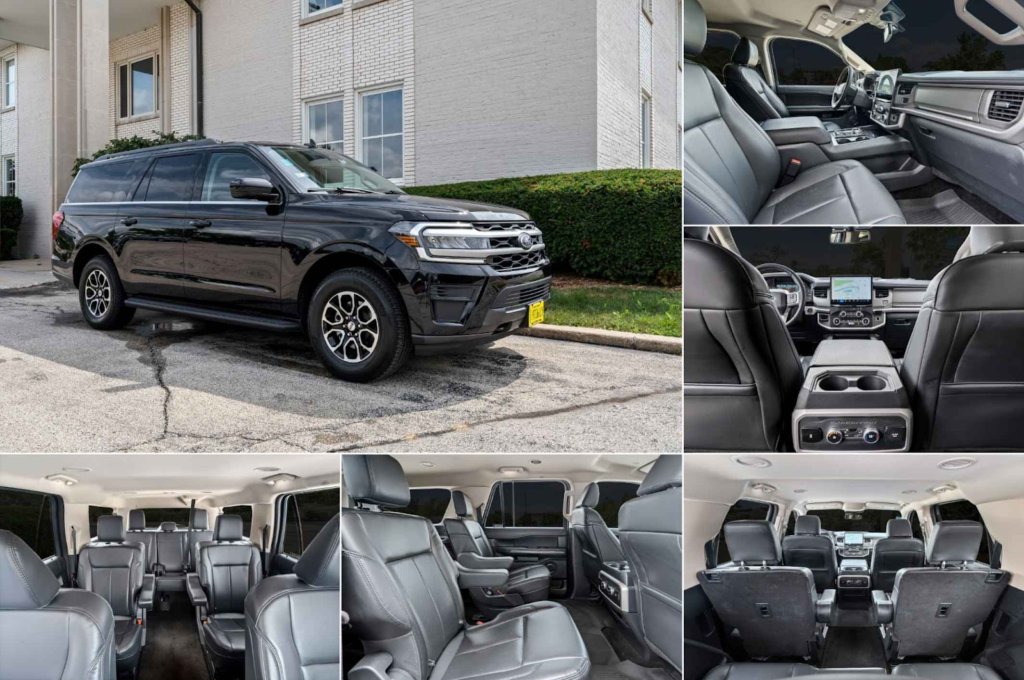
Urban environments introduce challenges that are easy to overlook during planning. Parking availability, loading zones, and venue access can significantly affect travel flow. In Chicago, parking near venues, hotels, or downtown offices is often limited or expensive. Multiple cars arriving at slightly different times can overwhelm available space and create confusion.
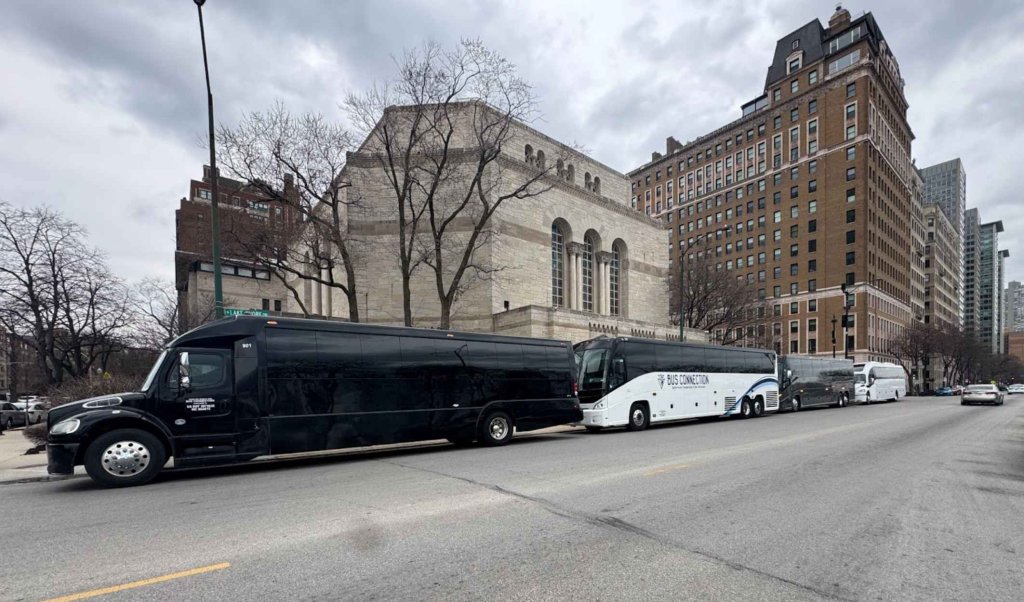
A charter bus simplifies this process. Vehicles are staged in designated loading areas, passengers board together, and departures are coordinated. For event planners and corporate organizers, this reduces friction at critical moments. It also improves the guest experience, as attendees are not left navigating unfamiliar areas or searching for parking on their own.
Group Experience and Cohesion
Beyond logistics, group transportation affects how the trip feels. Traveling together on a charter bus creates a shared experience. Conversations continue, instructions are communicated once, and the group remains cohesive. This is particularly valuable for corporate teams, wedding guests, sports teams, and tour groups.
Multiple cars fragment that experience. Communication becomes harder, arrivals are staggered, and the sense of unity is lost. For organizers who want the journey to be part of the experience, not a source of stress, a charter bus offers a clear advantage. Bus Connection often supports trips where cohesion matters just as much as transportation itself.
Environmental Considerations
Environmental impact is increasingly part of transportation decision-making. Multiple cars increase fuel consumption and emissions, particularly when traveling similar routes. A single charter bus transporting the same group reduces the number of vehicles on the road and improves efficiency.
For organizations with sustainability goals, or planners who want to reduce their environmental footprint, charter buses offer a more responsible option. While this may not be the primary decision factor for every group, it is an important consideration in modern group travel logistics.
When Multiple Cars May Still Make Sense
There are situations where multiple cars can be appropriate. Very small groups, short local trips, or highly flexible schedules may not require centralized transportation. If participants are arriving from many different starting points and timing is not critical, individual travel may be sufficient.
The key is recognizing when complexity outweighs convenience. As soon as timing, coordination, or responsibility increases, the balance shifts. Experienced planners evaluate these factors early rather than defaulting to individual travel out of habit.
Chicago-Specific Considerations
Chicago’s scale and infrastructure amplify the differences between charter bus travel and multiple cars. Airport transfers from O’Hare or Midway involve luggage, curb access, and traffic variability. Downtown routes involve congestion and limited parking. Suburban venues introduce distance and timing buffers.
These factors make group transportation Chicago planning more than a theoretical exercise. The right transportation choice must account for local conditions. Bus Connection’s experience operating across Chicago and surrounding areas allows planners to anticipate challenges and select solutions that work in practice, not just on paper.
Making the Right Choice for Your Group
Choosing between a charter bus and multiple cars should be a deliberate decision, not an assumption. Planners should consider group size, distance, schedule sensitivity, safety expectations, and the desired experience. Asking these questions early leads to better outcomes and fewer last-minute adjustments.
Working with a professional provider allows planners to evaluate options realistically. Bus Connection approaches transportation as a planning partnership, helping clients determine when a charter bus is the better choice and when flexibility makes sense. This consultative approach ensures transportation supports the overall goal of the trip rather than becoming an obstacle.
A Note on Current Planning Opportunities
For groups planning upcoming travel, Bus Connection is currently offering a limited-time Promo Offer running through the end of February 2026. Qualifying local bookings may receive a 15% discount across services and vehicle types, with complimentary onboard Wi-Fi available upon request. The offer applies to local services within a defined radius of O’Hare International Airport and is subject to availability and standard terms.
For organizers weighing their transportation options, this can be a timely opportunity to secure professional, coordinated group travel while planning ahead.